What We Made Together: One Year of Community Workshops
Before every workshop, there is a moment when the room is still mostly empty.
The lo-fi jazz gets turned up just enough to call out to anyone still searching for us. I scan the room once more, making sure each table has what it needs and feels ready to receive whoever walks in.
Then someone appears at the door. “Is this the Hued Songs workshop?”
When Hued Songs was awarded the WLW Catalyst grant to deepen our partnership with The African-American Research Library & Cultural Center, we began with a question: What if, instead of only inviting people to witness creativity, we invited them inside of the process? What would it be like to empower people with tools & guidance by professional artists, and encourage them to bring art into their own homes and communities by creating space for them to first explore their own expressions, freely. For the last year, we’ve engaged in an experiment of what creative freedom might look like when practiced in community.
What We Made
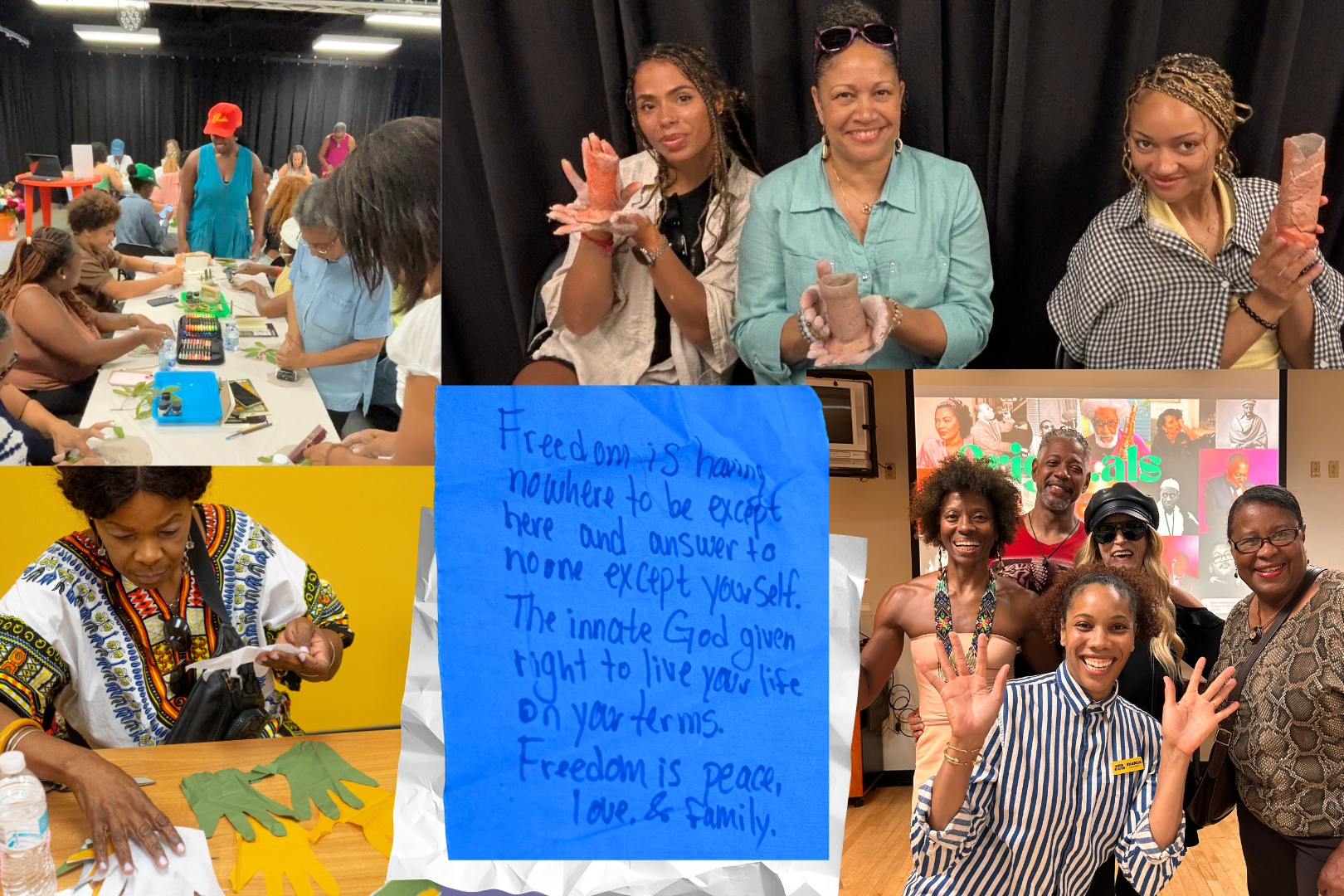
We told stories through poetry and creative writing workshops with Arsimmer McCoy. Wrote songs to heal our deepest wounds with Inez Barlatier, and crafted melodies guided by Kendall “King” Friday.
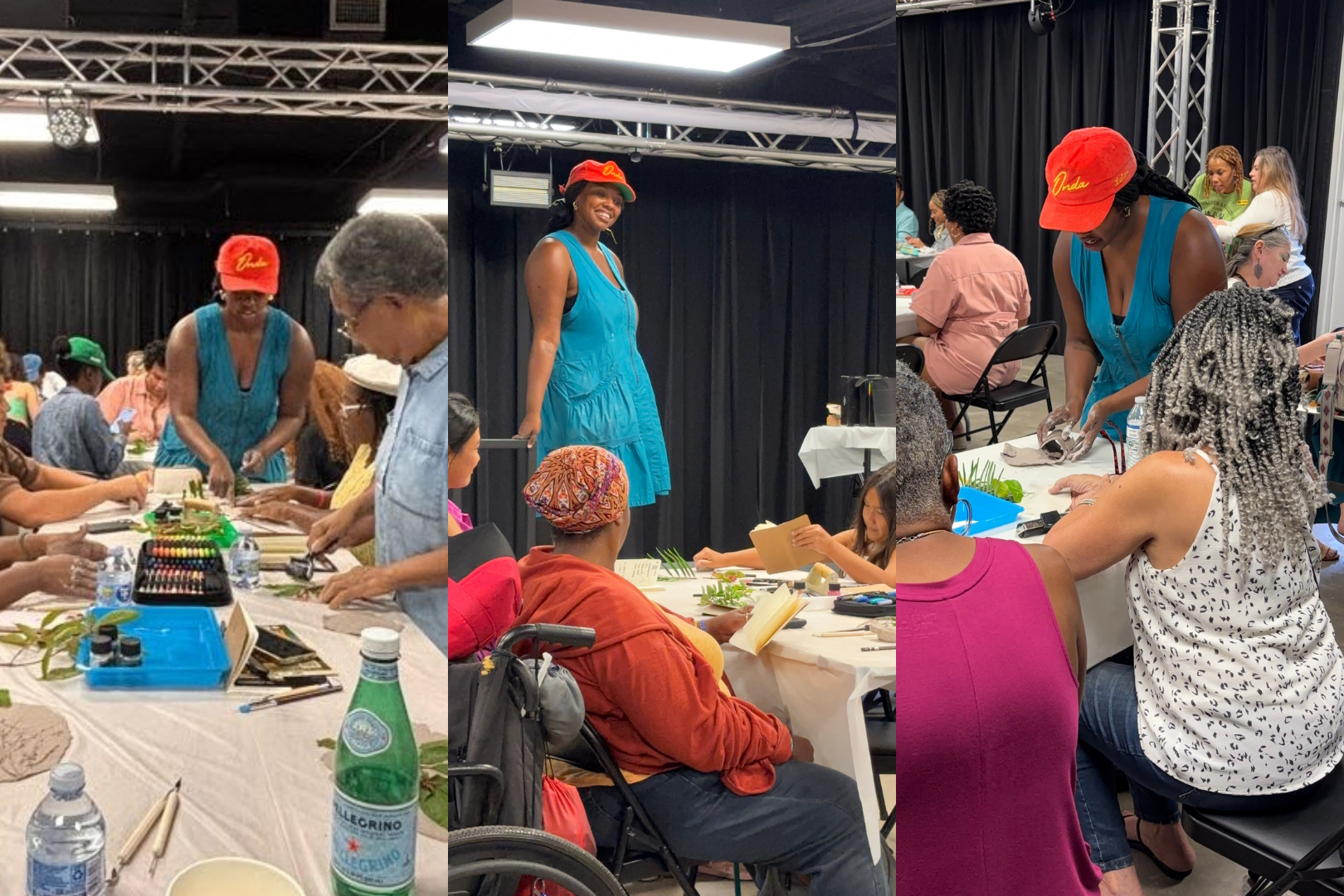
We made with our hands through clay reliefs guided by Amaya Estrada, experimented with embroidery alongside Kandy G. Lopez, and immortalized moments of presence with Symone Titania Major.
We made with our bodies through percussion workshops, dance, intuitive movement and embodied experiencing led by Clinton Harris, Alana DaCosta, Pedro Rodriguez and Abasi Hanif.
I even stepped from producer into teaching artist myself, guiding a mixed-media workshop exploring improvisation and jazz.
Most of all, we met and made alongside one another.
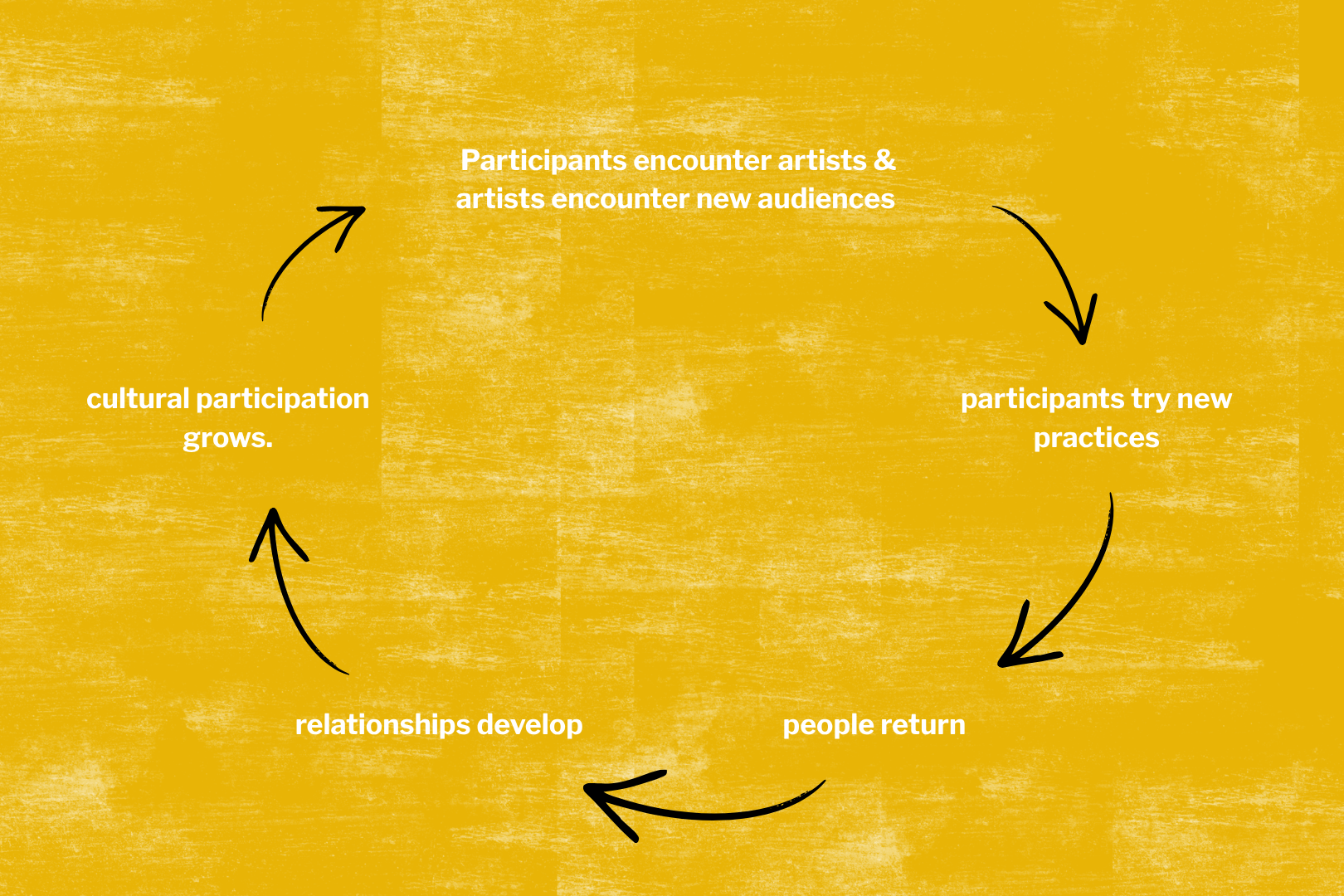
Conversations stretched and lingered beyond the workshop tables. Strangers entered the room and left exchanging numbers, ideas, recommendations, and plans. Neighbors who had lived near one another for years met for the first time. New friendships were sown with art and watered with laughter and recognition. People talked about exploring their own neighborhoods differently. Artists met new audiences. Parents created beside their children. Adult children brought their parents. Friends, partners, siblings, and people who arrived alone all found themselves making alongside someone else.
“Community is really important. And creating environments where community can happen is helpful and necessary.”
That sentence has stayed with me. Community does not simply appear because people occupy the same room. Space has to be made for it to form.
What We Learned
Free programming expands access, and attendance stays unpredictable
One workshop we had over 100 RSVPs – but 32 people came. Another, we had to create an overflow space to accommodate all of the additional attendees who arrived to participate.
Sometimes the room was quieter than expected. Other times we were rearranging chairs while people walked in.
Free community programming comes with a particular kind of unpredictability. An RSVP does not always translate neatly into attendance, and attendance does not always behave according to a spreadsheet. What we could control was what happened once someone crossed the threshold.
Whether twelve people arrived or a room filled beyond expectation, we tried to maintain the same commitment to warmth, preparation, curiosity, and belonging.
The numbers changed. The welcome did not.
2. Access sometimes begins with an invitation to try
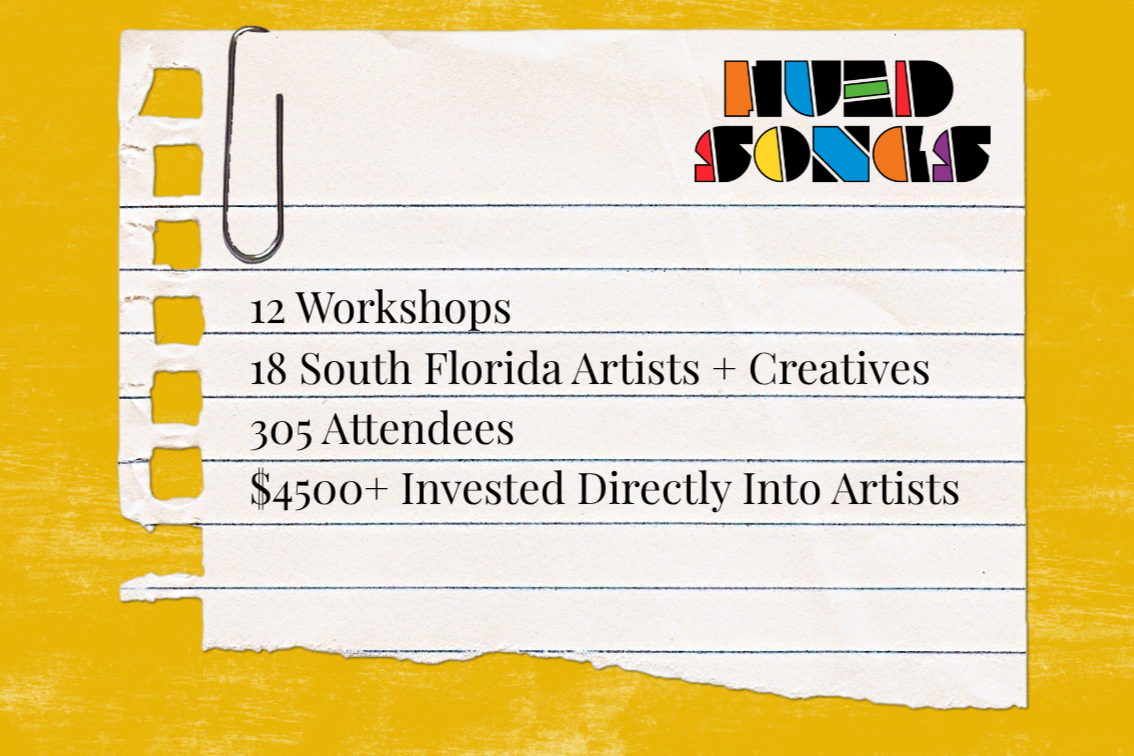
More than 74% of the participants surveyed had never attended a workshop by Hued Songs and/or The African American Research Library before. Most folks entered unsure of what to expect. Some shared feeling hesitant or self conscious about making something creatively. That matters.
Access to the arts is often discussed in terms of ticket prices, geography, transportation, or institutional barriers; all of those things matter deeply. But there is another, quieter barrier: the feeling that something might not be for you.
After attending a workshop though, 96% of participants felt the experience matched what had been advertised and 89% more indicated that they intended to attend another workshop.
“Introducing yourself to a new and unfamiliar field is much easier when you’re doing it with a community instead of [just] yourself.”
Again and again, we watched people discover that they did not need to arrive already knowing how. They simply needed permission to begin.
3. Artists need support
Hued Songs was created with the guiding belief that artists deserve to be seen, heard and paid.
Over the course of these workshops, more than $4,500 went directly into the hands of participating artists. Each workshop also included a materials budget of up to $250 so artists could thoughtfully design their experience without absorbing those costs themselves. This is beyond the $200,000+ invested in artists this past season through productions, performances, events, and exhibitions.
But this year reminded us that artist support extends beyond compensation.
Demonstrating technique, managing material, creating and holding the invisible energy and emotional state of the room is a lot of work. The artists, learned from these experiences, and can take those skills forward into spaces beyond Hued Songs to produce and generate revenue on their own. We learned too. The workshops gave us the opportunity to learn how essential it is to ensure artists feel supported throughout their experience: from preparation, to volunteer support, and day of support with teaching assistants.
Good community programming is not simply about putting an artist in a room. It is also about building the infrastructure around them that allows their artistry, and everyone else in the room, to flourish.
And We Are Not Finished Making
This first year reinforced something we suspected from the beginning:
People want places to experiment and create without needing to be an expert.
They want reasons to gather in their own neighborhoods, discover what exists in their own backyards, and feel more connected to the people with whom they share a city.
And, artists need spaces where they can teach, experiment, meet new audiences, and participate in the cultural life of the communities around them.
This work doesn’t happen alone or in a vacuum, and couldn’t happen without partners, investment and support from people who genuinely care about the arts. We want to thank The African-American Research Library & Cultural Center, their staff and facilities team. We must thank the artists for sharing their time, craft and artistry with the community, and we are deeply grateful to Wayne and Lucretia Weiner whose generosity made this all possible.
Our next chapter of workshops will unfold across two Broward County Cultural Spaces: The African-American Research Library & Cultural Center, AND The Daisy Arts Center, Hued Songs’ artistic home, just down the street inside of Sistrunk’s Corridor.
New artists. New materials. New people walking through the door wondering exactly what they’ve signed themselves up for with the same thing waiting for them on the other side.
A table or an open space.
Something to create, play, or feel.
Someone beside you to share it with.
And enough room to try.
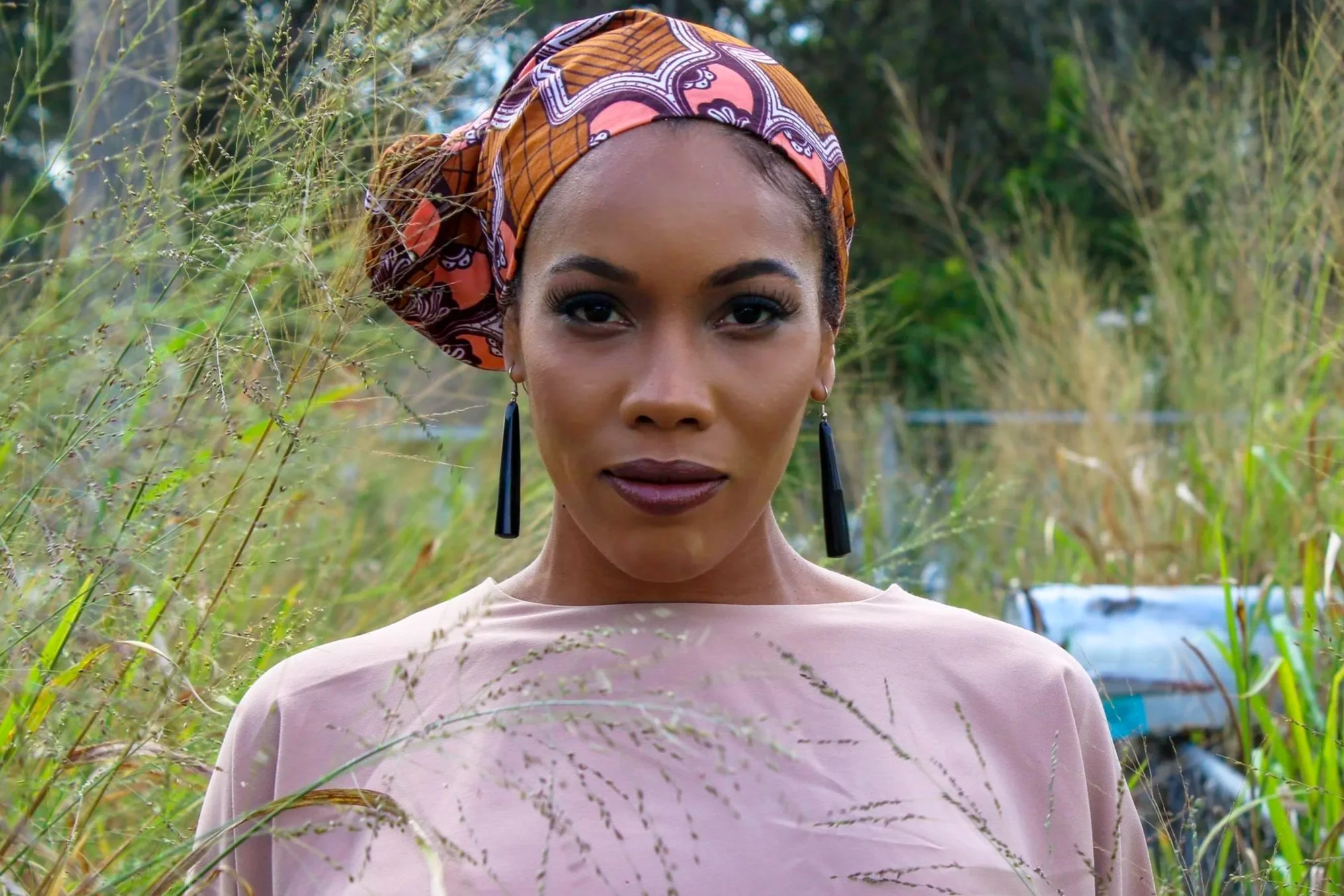
Sharlia Gulley Lebreton Paz, Hued Songs Programs Manager
Workshop dates land in the newsletter first. Sign up and pull up a seat.